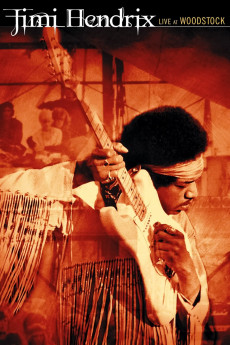
Jimi Hendrix: Live at Woodstock
Nine o'clock on Monday morning, August 18, 1969: while the work force was starting the day, Jimi Hendrix was taking the stage at Woodstock. While hundreds of thousands had already left, 25,000 people remained to see this incredible performance. Hendrix, along with drummer Mitch Mitchell and bassist Billy Cox, offered masterly renditions of the songs of the recently disbanded Experience ("Hey Joe," "Foxey Lady"), and gave a preview of the blues-based Band of Gypsys ("Izabella," "Hear My Train A Comin'"), as well as Jimi's era-defining rendition of "The Star Spangled Banner." Though the weekend had witnessed some landmark performances by other great artists, this performance from Hendrix is regarded by many as the defining moment in a festival ripe with defining moments.
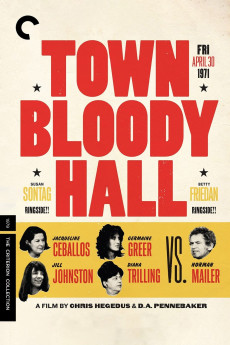
Town Bloody Hall
Norman Mailer and a panel of feminists — Jacqueline Ceballos, Germaine Greer, Jill Johnston, and Diana Trilling — debate the issue of Women's Liberation.
Assume the Position with Mr. Wuhl
Emmy-winning actor-comedian Robert Wuhl assumes the role of college professor in this hilarious history lesson conducted in front of an audience of actual New York City college students. Four segments explore the lesser-known aspects of America's storied past that everybody thought they already knew -- including the truth about Paul Revere, the hypocrisy of several founding fathers and the origin of many "modern" ideas.
Jimi Plays Monterey
Jimi Hendrix's debut American set at 1967's Monterey Pop Festival is generally considered one of the most radical and legendary live shows ever. Virtually unknown to American audiences at the time, even though he was already an established entity in the UK, Hendrix and his two-piece Experience explode on stage, ripping through blues classics "Rock Me Baby" and Howlin' Wolf's "Killing Floor," interpreting and electrifying Bob Dylan's "Like a Rolling Stone," debuting songs from his yet-to-be-released first album and closing with the now historic sacrificing/burning of his guitar during an unhinged version of "Wild Thing" that even its writer Chip Taylor would never have imagined. Hendrix uses feedback and distortion to enhance the songs in whisper-to-scream intensity, blazing territory that had not been previously explored with as much soul-frazzled power.
Shake! Otis at Monterey
Renowned documentary filmmaker D.A. Pennebaker captures Otis Redding in his ascendancy, singing at the historic Monterey International Pop Festival in June 1967. Comedian Tom Smothers introduces Redding to a crowd that is leaving -- until Redding grabs them with his charged rendition of "Shake." Redding's performance also includes "Respect" (which he wrote), "I've Been Loving You Too Long," "Satisfaction," and "Try a Little Tenderness." Tragically, Redding died in a plane crash six months later. An innovative filmmaker who started in the 1950s making experimental films, Pennebaker garnered an Oscar nomination for Best Documentary Feature in 1993 for The War Room, his behind-the-scenes look at Bill Clinton's 1992 campaign. His other subjects have included Norman Mailer, Bob Dylan, and David Bowie.
Depeche Mode: 101
A fascinating documentary focusing on backstage realities of art and business during the British synthesizer band's 1988 American tour.
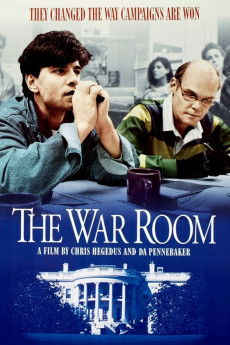
The War Room
A behind-the-scenes documentary about the Clinton for President campaign, focusing on the adventures of spin doctors James Carville and George Stephanopoulos.
×

 Chris Hegedus
Director
Chris Hegedus
Director
 Billy Cox
as
Self
Billy Cox
as
Self

 David Cross
as
Self
David Cross
as
Self
 Tucker Carlson
as
Self
Tucker Carlson
as
Self
 Robert Wuhl
as
Self
Robert Wuhl
as
Self

 John Lennon
as
Self
John Lennon
as
Self
 George Harrison
as
Self
George Harrison
as
Self
 Paul McCartney
as
Self
Paul McCartney
as
Self


 Bill Clinton
as
Himself
Bill Clinton
as
Himself
 Mike Evans
as
Himself
Mike Evans
as
Himself
 Max Parker
as
Himself
Max Parker
as
Himself

 43%
43%