Brasilia, Contradictions of a New City
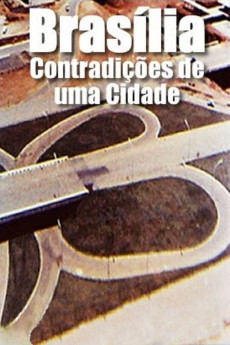
In 1967, de Andrade was invited by the Italian company Olivetti to produce a documentary on the new Brazilian capital city of Brasília. Constructed during the latter half of the 1950s and founded in 1960, the city was part of an effort to populate Brazil’s vast interior region and was to be the embodiment of democratic urban planning, free from the class divisions and inequalities that characterize so many metropolises. Unsurprisingly, Brasília, Contradições de uma Cidade Nova (Brasília, Contradictions of a New City, 1968) revealed Brasília to be utopic only for the wealthy, replicating the same social problems present in every Brazilian city. (Senses of Cinema)
Cat Skin
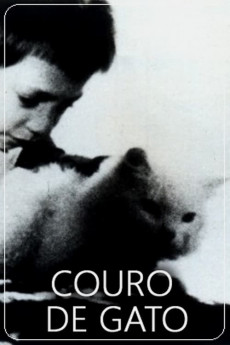
A few weeks before Carnival, slum boys organize huntings for stray cats, whose leather can be used in Samba percussion instruments, like the Tamborim, a small drum.
O Aleijadinho
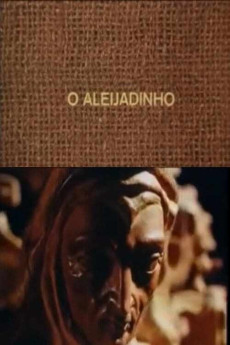
O Aleijadinho, a study of the work of Antonio Francisco Lisboa, the architect whose cathedral de Andrade had assisted in the restoration of more than 20 years earlier. de Andrade dedicated the film to his father, who had sent him on the expedition.
The Master of Apipucos
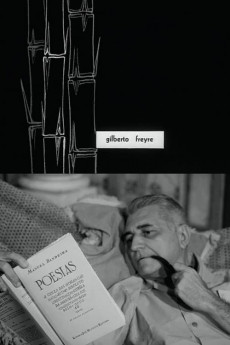
Documentary about influential Brazilian sociologist Gilberto Freyre, made in his country house in Apipucos, Pernambuco (Northeast Brazil).
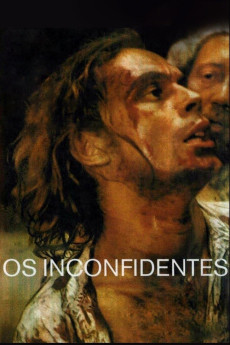
The Conspirators
The real story of the failed attempt of an independence coup by a group of intellectuals and rich men during Brazil's colonial days, from its beginning to the execution of Tiradentes.
The Brazilwood Man
Fantasy comedy about Brazilian writer Oswald de Andrade, one of the most important icons of Modernism in Brazil. In the film, Oswald is played by two actors: Ítala Nandi, as his feminine anima, and Flávio Galvão, as the masculine half.
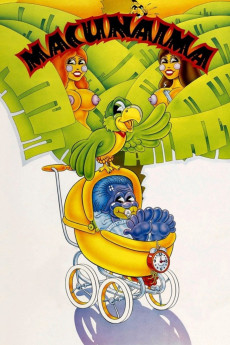
Macunaima
Born a fully grown black man in a village in the Brazilian jungle, Macunaíma later magically transforms into a white man before making an adventure-filled trip to the city of São Paulo. Once there, he becomes something of a dandy, falling in love with Ci, a revolutionary who dies in an accidental bombing. After robbing a ruthless industrialist, Macunaima returns to his village where he finds his newly acquired knowledge and possessions of little use.
The Priest and the Girl
In a small town in Minas Gerais, the arrival of a young priest causes a commotion in the conservative atmosphere of the place, aggravated by the sudden attraction this priest feels for a beautiful girl. This forbidden love affair soon turns into an unbridled passion.
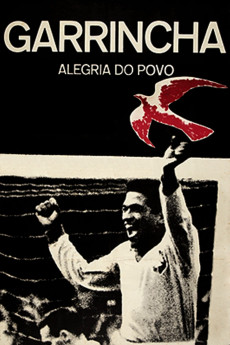
Garrincha - Alegria do Povo
Documentary about the most famous dribbler in Brazilian Soccer (some say in Soccer's history!) at the zenith of his career, showing classic scenes of 1958 and 1962 World Cup. Garrincha was a very original and talented player, having curved legs. Women and alcohol were his passion, and the cause of his later decadence. After a glorious career, he died in financial misery, forgotten.
The Poet of the Castle
A 10-minute portrait of modernist poet and de Andrade’s godfather, Manuel Bandeira, is clear in its affection for it subject, though like many New-Waveish films of the time, depicts the modern urban landscape as an ominous and alienating force.
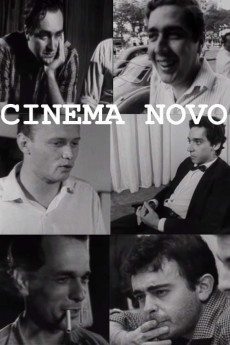
Cinema Novo
Originally produced for German TV, Improvised and Purposeful is a firsthand look at the "Cinema Novo" movement (otherwise known as the 'Brazilian New Wave'). Director Joaquim Pedro de Andrade focuses on six Cinema Novo filmmakers working in Rio in 1967.
×

 Joaquim Pedro de Andrade
Director
Joaquim Pedro de Andrade
Director
 Milton Gonçalves
as
Black man working
Milton Gonçalves
as
Black man working
 Carlos Gregório
as
Alvares Maciel
Carlos Gregório
as
Alvares Maciel
 Fábio Sabag
as
Visconde de Barbacena
Fábio Sabag
as
Visconde de Barbacena

 David José
as
David José
as
 Fernando Peixoto
as
Fernando Peixoto
as
 Hugo Carvana
as
Man with the duck
Hugo Carvana
as
Man with the duck


 Danuza Leão
as
Herself
Danuza Leão
as
Herself
 Nelson Pereira dos Santos
as
Himself
Nelson Pereira dos Santos
as
Himself
 Glauber Rocha
as
Himself
Glauber Rocha
as
Himself


 75%
75%