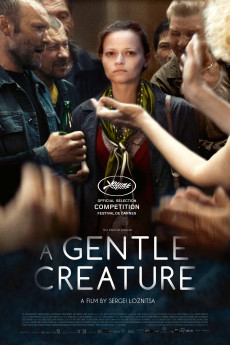
A Gentle Creature
A woman lives in a small village in Russia. One day she receives the parcel she sent to her husband, serving a sentence in prison. Confused and angered, she sets out to find why her package was returned to sender.
State Funeral
The enigma of the personality cult is revealed in the grand spectacle of Stalin’s funeral. The film is based on unique archive footage, shot in the USSR on March 5 - 9, 1953, when the country mourned and buried Joseph Stalin.
In the Fog
Western frontiers of the USSR, 1942. The region is under German occupation. A man is wrongly accused of collaboration. Desperate to save his dignity, he faces an impossible moral choice.
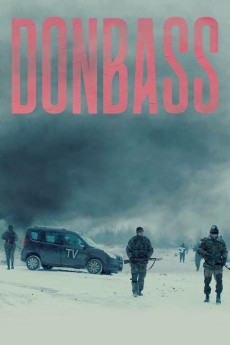
Donbass
In the historic Donbass region of eastern Ukraine, despite the cruel war that has been raging since 2014 between the self-proclaimed People's Republics of Donetsk and Luhansk and the Ukrainian government, people try to survive in the rotten heart of chaos, where violence disguises itself as peace, propaganda becomes univocal truth and hatred reigns in the name of love.
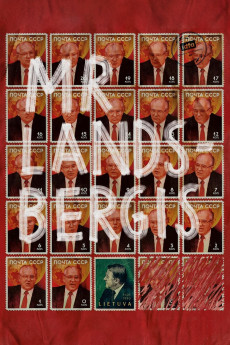
Mr. Landsbergis
This film about the Baltic nation of Lithuania from 1989 to 1991, when it broke away from the Soviet Union. This period of peaceful protests involving lots of singing came to be known as the "singing revolution."
My Joy
Georgy is driving a load of freight into Russia when, after an unpleasant encounter with the police at a border crossing, he finds himself giving a lift to a strange old man with disturbing stories about his younger days in the Army. After next picking up a young woman who works as a prostitute and is wary of the territory, Georgy finds himself lost, and despite asking some homeless men for help, he’s less sure than he was before of how to make his way back where he belongs. As brutal images of violence and alienation cross the screen, Georgy’s odyssey becomes darker and more desperate until it reaches an unexpected conclusion.
The Event
In August 1991 a failed coup d'état attempt (known as Putsch) led by a group of hard-core communists in Moscow, ended the 70-year-long rule of the Soviets. The USSR collapsed soon after, and the tricolour of the sovereign Russian Federation flew over Kremlin. As president Gorbachev was detained by the coup leaders, state-run TV and radio channels, usurped by the putschists, broadcast Tchaikovsky's "Swan Lake" instead of news bulletins, and crowds of protestors gathered around Moscow's White House, preparing to defend the stronghold of democratic opposition led by Boris Yeltsin, in the city of Leningrad thousands of confused, scared, excited and desperate people poured into the streets to become a part of the event, which was supposed to change their destiny. A quarter of a century later, Sergei Loznitsa revisits the dramatic moments of August 1991 and casts an eye on the event which was hailed worldwide as the birth of "Russian democracy".
A Night at the Opera
A documentary view of the galas of Paris’s Palais Garnier in the 1950s and ’60s.
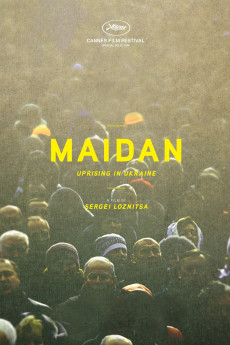
Maidan
A chronicle of the civil uprising against the regime of Ukrainian president Viktor Yanukovych that took place in Kyiv in the winter of 2013/14. The film follows the progress of the revolution: from peaceful rallies, half a million strong in the Maidan square, to the bloody street battles between protesters and riot police.
Austerlitz
The film observes visitors to a Holocaust memorial site on a former concentration camp, exploring their reasons for visiting and what they seek, and serves as a sometimes sardonic study of the relationship (or the clash) between contemporary culture and the sanctity of the site.
Victory Day
Every year, on the 9th of May, people gather in Treptower Park in Berlin. They come dressed in their best outfits or in Soviet military uniform. They carry flags, banners and posters. They lay flowers at the monument to the Soviet soldier; they sing, dance and drink. They celebrate the victory of the Soviet Union over Nazi Germany.The film is a direct reportage from Treptower Park 72 years after the victory.
Blockade
The images comprise only of material Sergei Loznitsa found in the Moscow film archives about the siege of Leningrad during the World War II. By providing the originally silent images with a meticulously reconstructed soundtrack, the scenes from everyday life under siege seem to be set in the present. By not intervening in the montage but giving the scenes room to tell a story, the scenes transcend the specific historic events and lead a new life. They do not evoke memories of the past, but become a breathtaking reanimation of reality.
×

 Sergey Loznitsa
Director
Sergey Loznitsa
Director
 Vasilina Makovtseva
as
A gentle creature
Vasilina Makovtseva
as
A gentle creature

 Nikita Khrushchev
as
Self
Nikita Khrushchev
as
Self
 Joseph Stalin
as
Self
Joseph Stalin
as
Self

 Yuliya Peresild
as
Anelya
Yuliya Peresild
as
Anelya
 Franco Moscon
as
SS Officer
Franco Moscon
as
SS Officer
 Thorsten Merten
as
German journalist
Thorsten Merten
as
German journalist

 Olga Shuvalova
as
Young prostitute
Olga Shuvalova
as
Young prostitute


 Sacha Distel
as
Self
Sacha Distel
as
Self


 60%
60%