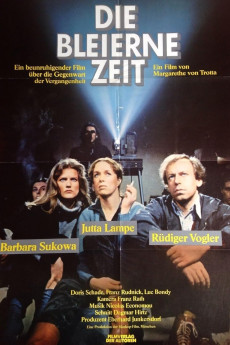
Marianne & Juliane
Germany, 1968: The priest's daughters Marianna and Juliane both fight for changes in society, like making abortion legal. However their means are totally different: while Juliane's committed as a reporter, her sister joins a terroristic organization. After she's caught by the police and put into isolation jail, Juliane remains as her last connection to the rest of the world. Although she doesn't accept her sister's arguments and her boyfriend Wolfgang doesn't want her to, Juliane keeps on helping her sister. She begins to question the way her sister is treated.
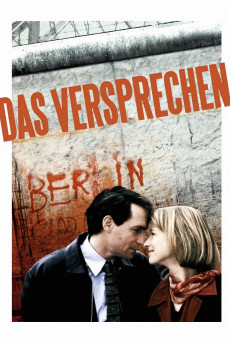
Das Versprechen
East-Berlin, 1961, shortly after the erection of the Wall. Konrad, Sophie and three of their friends plan a daring escape to Western Germany. The attempt is successful, except for Konrad, who remains behind. From then on, and for the next 28 years, Konrad and Sophie will attempt to meet again, in spite of the Iron Curtain. Konrad, who has become a reputed Astrophysicist, tries to take advantage of scientific congresses outside Eastern Germany to arrange encounters with Sophie. But in a country where the political police, the Stasi, monitors the moves of all suspicious people (such as Konrad's sister Barbara and her husband Harald), preserving one's privacy, ideals and self-respect becomes an exhausting fight, even as the Eastern block begins its long process of disintegration.
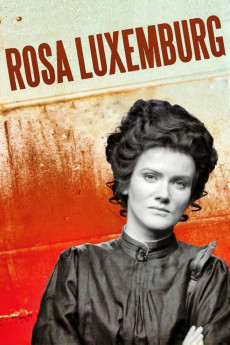
Rosa Luxemburg
Polish socialist and Marxist Rosa Luxemburg works tirelessly in the service of revolution in early 20th century Poland and Germany. While Luxemburg campaigns for her beliefs, she is repeatedly imprisoned as she forms the Spartacist League offering a new vision for Germany.
Ingeborg Bachmann - Journey Into the Desert
When Ingeborg Bachmann and Max Frisch meet for the first time in Paris in the summer of 1958, they are already international celebrities of the literary world. In the four years that follow, they dabble in great love and an open relationship between his hometown of Zurich and her adopted Rome.
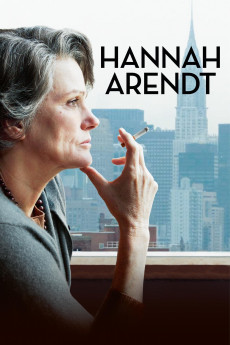
Hannah Arendt
HANNAH ARENDT is a portrait of the genius that shook the world with her discovery of “the banality of evil.” After she attends the Nazi Adolf Eichmann’s trial in Jerusalem, Arendt dares to write about the Holocaust in terms no one has ever heard before. Her work instantly provokes a furious scandal, and Arendt stands strong as she is attacked by friends and foes alike. But as the German-Jewish émigré also struggles to suppress her own painful associations with the past, the film exposes her beguiling blend of arrogance and vulnerability — revealing a soul defined and derailed by exile.
×

 Margarethe von Trotta
Director
Margarethe von Trotta
Director
 Felix Moeller
as
Felix Moeller
as
 Rüdiger Vogler
as
Wolfgang
Rüdiger Vogler
as
Wolfgang
 Christina Große
as
Christina Große
as
 Karl Kranzkowski
as
1st Border Official
Karl Kranzkowski
as
1st Border Official
 Anian Zollner
as
Konrad I
Anian Zollner
as
Konrad I
 Meret Becker
as
Sophie I
Meret Becker
as
Sophie I
 Daniel Olbrychski
as
Leo Jogiches
Daniel Olbrychski
as
Leo Jogiches
 Barbara Lass
as
Rosas Mutter
Barbara Lass
as
Rosas Mutter

 Vicky Krieps
as
Ingeborg Bachmann
Vicky Krieps
as
Ingeborg Bachmann
 Ronald Zehrfeld
as
Max Frisch
Ronald Zehrfeld
as
Max Frisch
 Ulrich Noethen
as
Hans Jonas
Ulrich Noethen
as
Hans Jonas
 Adolf Eichmann
as
Himself
Adolf Eichmann
as
Himself
 Janet McTeer
as
Mary McCarthy
Janet McTeer
as
Mary McCarthy
 Nicholas Woodeson
as
William Shawn
Nicholas Woodeson
as
William Shawn


 76%
76%