Moses und Aron
A familiar Biblical tale transformed into a cinematic opera of seemingly endless possibility. In expressive, melodic tones, the fraternal pair debate God’s true message and intent for His creations, a conflict that leads their followers towards chaos and sin. Set almost entirely within a Roman amphitheater whose history lends every precise line-reading and gesture, every startling camera move and cut, a totalizing force.
The Chronicle of Anna Magdalena Bach
The life and music of Johann Sebastian Bach as presented by his wife, Anna.
Class Relations
A young man, recently arrived in New York from Europe, becomes swept up in a series of events that are beyond his knowledge or control.
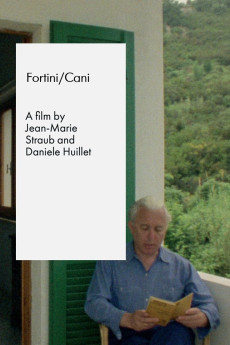
Fortini/Cani
The film is a sort of presentation of Franco Fortini's book 'I Cani del Sinai'. Fortini, an Italian Jew, reads excerpts from the book about his alienation from Judaism and from the social relations around him, the rise of Fascism in Italy, the anti-Arab attitude of European culture. The images, mostly a series of Italian landscape shots, provide a backdrop that highlights the meaning of the text. - Fabrizio Sabidussi
Sicily!
A man returns to visit his native Sicily after living in New York for a long time. He learns about the Sicilian way of life from stylized conversations with an orange picker, his fellow train passengers, his mother, and a knife-sharpener.
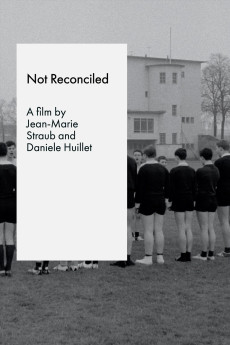
Not Reconciled
A story about the continuity and collapse of history, the power of suppression, and the terror of reconciliation; loyalty, treason and revenge. In a brave cinematic game, Heinrich Böll’s story Billiards at Half-Past Nine is split up into cracks, blocks, breaks and sudden turns, as the life story of a German family, covering numerous generations, is propelled forward.
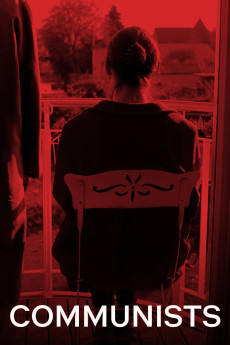
Communists
Jean-Marie Straub pushes this musicality of blocks to a paroxysmal extreme, mixing blocks of time (40 years separate the various extracts that are going to be used, and what is to be filmed), blocks of text (Malraux, Fortini, Vittorini, Hölderlin) and blocks of language (French, Italian, German), and from this ruckus emerges the history of the world, yes, History with a capital H, and from the same movement, the political hope of its being overtaken. So this is an adventure film, about the Human adventure, still one that is always, in the end, overtaken by Nature.
History Lessons
Set in contemporary Rome, the film shows through a series of encounters with “ancient” Romans, how the economic and political manipulation by ancient Roman society led to Caesar’s dictatorship. - British Film Institute

From the Clouds to the Resistance
'Dalla nube alla resistenza (From the Cloud to the Resistance ) (1978), based on two works by Cesare Pavese, falls into the category of History Lessons and Too Early, Too Late as well. It, too, has two parts—a twentieth-century text and a text regarding the myths of antiquity, each set in the appropriate landscape. Pavese's The Moon and the Bonfires looks back on the violent deaths of Italian anti-Fascist resistance fighters; Dialogues with Leucò is a series of dialogues between heroes and gods, connecting myth and history and returning to an ambiguous stage in the creation of distinctions, such as that between animal and human, which are fundamental to grammar and language itself. Such a juxtaposition of political engagement with profoundly contemplative issues such as myth, nature, and meaning points to the characters of Empedocles and Antigone in the Hölderlin films.' (From "Landscapes of resistance. The German Films of Danièle Huillet and Jean-Marie Straub" by Barton Byg)
These Encounters of Theirs
These Encounters Of Theirs divides 10 non-professional actors into couples, then has them take turns in declaiming the Dialogues With Leuco, Cesare Pavese's abstract, philosophical work.
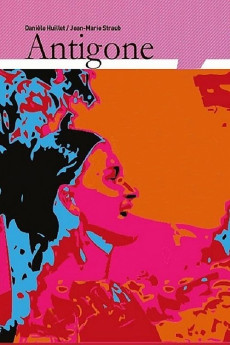
Die Antigone des Sophokles nach der Hölderlinschen Übertragung für die Bühne bearbeitet von Brecht 1948
A fearless Antigone, refusing to allow the dishonored body of her murdered brother Polynices to be devoured by vultures and dogs, defies the Thebian tyrant Creon by burying him.
×


 Jean-Marie Straub
Director
Jean-Marie Straub
Director


 Mario Adorf
as
Der Onkel
Mario Adorf
as
Der Onkel





 64%
64%