Defying the Nazis: The Sharps' War
Join an American couple’s courageous mission in 1939 to help refugees escape Nazi-occupied Europe. Over the course of two years, the pair will risk their lives so that hundreds can live in freedom.
Muhammad Ali
An in-depth look at the life of boxer, Muhammad Ali, including his years as an activist and philanthropist.
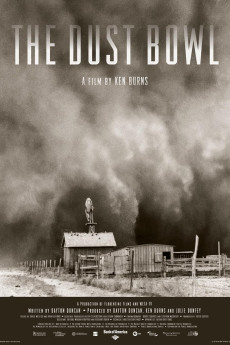
The Dust Bowl
A documentary about the 1930s drought of North American prairie farm land, and its consequences during the great depression.
Huey Long
Ken Burns' portrait of Louisiana governor and U.S. senator Huey Long.
The Congress
For 200 years, the United States Congress has been one of the country's most important and least understood institutions. In this elegant, thoughtful and often touching portrait, Ken Burns explores the history and promise of this unique American institution. Using historical photographs and newsreels, evocative live footage and interviews with David Broder, Alistair Cooke, Cokie Roberts, Charles McDowell and others, the award-winning film chronicles the personalities, events and issues that have animated the first 200 years of Congress and, in turn, our country.
Empire of the Air: The Men Who Made Radio
For 50 years radio dominated the airwaves and the American consciousness as the first “mass medium.” In Empire of the Air: The Men Who Made Radio, Ken Burns examines the lives of three extraordinary men who shared the primary responsibility for this invention and its early success, and whose genius, friendship, rivalry and enmity interacted in tragic ways. This is the story of Lee de Forest, a clergyman’s flamboyant son, who invented the audion tube; Edwin Howard Armstrong, a brilliant, withdrawn inventor who pioneered FM technology; and David Sarnoff, a hard-driving Russian immigrant who created the most powerful communications company on earth.
The Mayo Clinic, Faith, Hope and Science
The Mayo Clinic tells the story of a unique medical institution that has been called a "Medical Mecca," the "Supreme Court of Medicine," and the "place for hope where there is no hope." The Mayo Clinic began in 1883 as an unlikely partnership between the Sisters of Saint Francis and a country doctor named William Worrall Mayo after a devastating tornado in rural Minnesota. Since then, it has grown into an organization that treats more than a million patients a year from all 50 states and 150 countries. Dr. Mayo had a simple philosophy he imparted to his sons Will and Charlie: "the needs of the patient come first." They wouldn't treat diseases...they would treat people. In a world where healthcare delivery is typically fragmented among individual specialties, the Mayo Clinic practices a multi-specialty, team-based approach that has, from its beginnings, created a culture that thrives on collaboration.
Benjamin Franklin
Exploring the life and work of writer and publisher, scientist and inventor, diplomat and signer of both the Declaration of Independence and the United States Constitution: Benjamin Franklin.
The Central Park Five
In 1989, five black and Latino teenagers from Harlem were arrested and later convicted of raping a white woman in New York City's Central Park. They spent between 6 and 13 years in prison before a serial rapist confessed that he alone had committed the crime, leading to their convictions being overturned. Set against a backdrop of a decaying city beset by violence and racial tension, this is the story of that horrific crime, the rush to judgment by the police, a media clamoring for sensational stories and an outraged public, and the five lives upended by this miscarriage of justice.
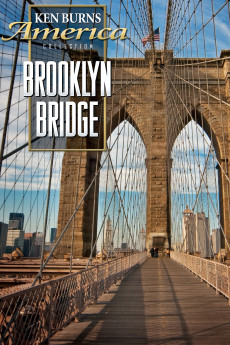
Brooklyn Bridge
Today it's a symbol of strength and vitality. 135 years ago, it was a source of controversy. This documentary examines the great problems and ingenious solutions that marked the construction of the Brooklyn Bridge. From conception to construction, it traces the bridge's transformation from a spectacular feat of heroic engineering to an honored symbol in American culture.
Thomas Hart Benton
Thomas Hart Benton's paintings were energetic and uncompromising. Today his works are in museums, but Benton hung them in saloons for ordinary people to appreciate.
×



 Ken Burns
Director
Ken Burns
Director
 Dann Fink
as
1 episode, 2021
Dann Fink
as
1 episode, 2021
 Keith David
as
Narrator unknown episodes
Keith David
as
Narrator unknown episodes
 Malcolm X
as
Self
Malcolm X
as
Self
 Jesse Jackson
as
Self unknown episodes
Jesse Jackson
as
Self unknown episodes
 Kevin Conway
as
Ernie Pyle 3 episodes, 2012
Kevin Conway
as
Ernie Pyle 3 episodes, 2012
 Patricia Clarkson
as
Hazel Lucas Shaw 3 episodes, 2012
Patricia Clarkson
as
Hazel Lucas Shaw 3 episodes, 2012
 Amy Madigan
as
Sanora Babb 3 episodes, 2012
Amy Madigan
as
Sanora Babb 3 episodes, 2012
 Peter Coyote
as
Self - Narrator 4 episodes, 2012
Peter Coyote
as
Self - Narrator 4 episodes, 2012


 Derek Jacobi
as
(voice)
Derek Jacobi
as
(voice)
 Christopher Murney
as
(voice)
Christopher Murney
as
(voice)
 Julie Harris
as
(voice)
Julie Harris
as
(voice)

 Jason Robards
as
Narrator
Jason Robards
as
Narrator
 Orson Welles
as
Professor in War of the Worlds Broadcast
Orson Welles
as
Professor in War of the Worlds Broadcast
 Harry S. Truman
as
Self - Announces Bombing of Hiroshima
Harry S. Truman
as
Self - Announces Bombing of Hiroshima
 Dwight D. Eisenhower
as
Self - Announces Landing in Normandy
Dwight D. Eisenhower
as
Self - Announces Landing in Normandy

 Sam Waterston
as
Charlie Mayo
Sam Waterston
as
Charlie Mayo
 Josh Lucas
as
Other Voices
Josh Lucas
as
Other Voices
 Tom Hanks
as
Will Mayo
Tom Hanks
as
Will Mayo

 Adam Arkin
as
Elkanah Watson 1 episode, 2022
Adam Arkin
as
Elkanah Watson 1 episode, 2022
 Liam Neeson
as
unknown episodes
Liam Neeson
as
unknown episodes
 Paul Giamatti
as
unknown episodes
Paul Giamatti
as
unknown episodes

 Donald Trump
as
Self
Donald Trump
as
Self
 Al Sharpton
as
Self
Al Sharpton
as
Self
 Ed Koch
as
Self - Former Mayor, New York
Ed Koch
as
Self - Former Mayor, New York
 Mel Blanc
as
Bugs Bunny (clip from 'Bowery Bunny')
Mel Blanc
as
Bugs Bunny (clip from 'Bowery Bunny')
 George Raft
as
Self (clip from "The Bowery")
George Raft
as
Self (clip from "The Bowery")

 Burl Ives
as
Self
Burl Ives
as
Self


 72%
72%