The Great Buster
A celebration of the life and career of one of America's most influential and celebrated filmmakers and comedians—Buster Keaton—whose singular style and fertile output during the silent era created his legacy as a true cinematic visionary.
Piero Vivarelli, Life as a B-Movie
The unbridled life and kaleidoscopic filmography of Piero Vivarelli, who made Italian B-movies of all genres, wrote hit rock songs and penned the screenplay for Sergio Corbucci's Western "Django," adored by Quentin Tarantino, are intertwined in a portrait of an unsung postwar provocateur and revolutionary (the only non-Cuban besides Che Guevara to be given a Cuban Communist Party card signed by Fidel Castro). The creative doc is also a prism into an unexplored territory of Italian — and by extension global — pop culture and its unique vitality.
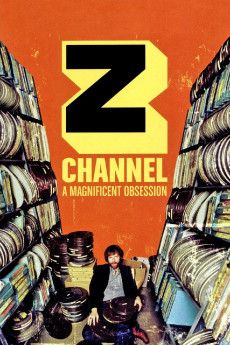
Z Channel: A Magnificent Obsession
A documentary on the Z Channel, one of the first pay cable stations in the US, and its programming chief, Jerry Harvey. Debuting in 1974, the LA-based channel's eclectic slate of movies became a prime example of the untapped power of cable television.
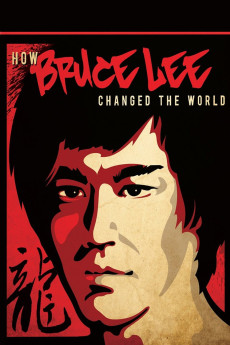
How Bruce Lee Changed the World
More than just a biography, this film explores Bruce Lee's global impact to see how he has influenced all areas of popular culture including fitness, cinema, music, sport, dance, video games and philosophy. A journey across the United States, Asia and Europe, takes Shannon Lee on a trip back to her father's roots in Hong Kong and China. With unique access to the family's photographic archive, home movies and all material owned by the Bruce Lee Foundation.
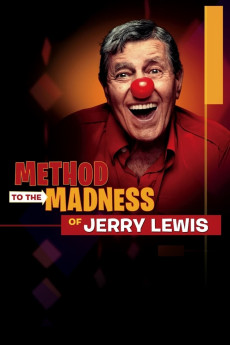
Method to the Madness of Jerry Lewis
It will surprise few to discover that star of stage and screen Jerry Lewis has sought to amuse others since he was five years old. Since that early age, audiences split their sides watching his wacky antics, whilst wannabe comics aspired to his prolific career, from his solo work to his double act with Dean Martin. Indeed, many of his famous fans share stories of affection and admiration for the now 86-year-old performer and filmmaker in Gregg Barson’s documentary. Steven Spielberg, Quentin Tarantino, Eddie Murphy and Jerry Seinfeld are among those waxing lyrical about Lewis’ particular brand of genius, and his place in the annals of history. Including a cavalcade of hilarious clips from eight decades in the spotlight, Method to the Madness of Jerry Lewis examines the icon and his influence, and is essential viewing for aficionados of the man and his legacy.
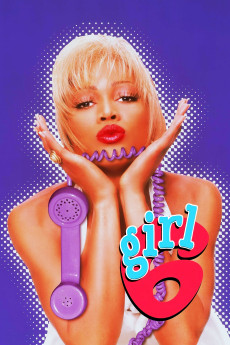
Girl 6
A struggling actress in New York City takes a job as a phone sex operator.
The Cutting Edge: The Magic of Movie Editing
Documentary about the art of film editing. Clips are shown from many groundbreaking films with innovative editing styles.
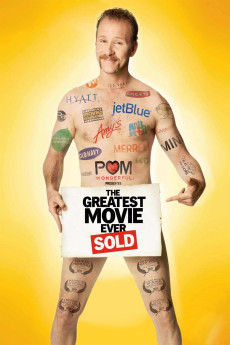
The Greatest Movie Ever Sold
A documentary about branding, advertising and product placement that is financed and made possible by brands, advertising and product placement.
Django & Django
A tribute to Italian filmmaker Sergio Corbucci (1926-90), presented by American filmmaker Quentin Tarantino.
Chasing Chasing Amy
CHASING CHASING AMY explores the transformational impact of a ‘90s rom-com on a 12 year old kid from Kansas, coming of age and contending with queer identity. For young Sav Rodgers, the Kevin Smith cult classic, CHASING AMY, became a life raft. As Rodgers examines the film and its making as a cornerstone of LGBTQ+ cinema, he finds himself at a complicated crossroads.
Not Quite Hollywood: The Wild, Untold Story of Ozploitation!
As Australian cinema broke through to international audiences in the 1970s through respected art house films like Peter Weir's "Picnic At Hanging Rock," a new underground of low-budget exploitation filmmakers were turning out considerably less highbrow fare. Documentary filmmaker Mark Hartley explores this unbridled era of sex and violence, complete with clips from some of the scene's most outrageous flicks and interviews with the renegade filmmakers themselves.
Splice Here: A Projected Odyssey
A 'cine-ramic' roller-coaster ride through the rise, fall and re-birth of projected film.
What She Said: The Art of Pauline Kael
Pauline Kael (1919–2001) was undoubtedly one of the greatest names in film criticism. A Californian native, she wrote her first review in 1953 and joined ‘The New Yorker’ in 1968. Praised for her highly opinionated and feisty writing style and criticised for her subjective and sometimes ruthless reviews, Kael’s writing was refreshingly and intensely rooted in her experience of watching a film as a member of the audience. Loved and hated in equal measure – loved by other critics for whom she was immensely influential, and hated by filmmakers whose films she trashed - Kael destroyed films that have since become classics such as The Sound of Music and raved about others such as Bonnie and Clyde. She was also aware of the perennial difficulties for women working in the movies and in film criticism, and fiercely fought sexism, both in her reviews and in her media appearances.
×


 Peter Bogdanovich
Director
Peter Bogdanovich
Director
 Quentin Tarantino
as
Self
Quentin Tarantino
as
Self
 Frank Capra
as
Self
Frank Capra
as
Self
 Johnny Knoxville
as
Self
Johnny Knoxville
as
Self
 Paul Dooley
as
Self
Paul Dooley
as
Self

 Franco Nero
as
Self
Franco Nero
as
Self
 Beryl Cunningham
as
Self
Beryl Cunningham
as
Self
 Xan Cassavetes
Director
Xan Cassavetes
Director
 Sam Peckinpah
as
Self
Sam Peckinpah
as
Self
 Alan Rudolph
as
Self
Alan Rudolph
as
Self
 Jacqueline Bisset
as
Self
Jacqueline Bisset
as
Self
 Donnie Yen
as
Donnie Yen
as
 Margaret Cho
as
Interviewee
Margaret Cho
as
Interviewee
 Jackie Chan
as
Self
Jackie Chan
as
Self
 Steven Spielberg
as
Self
Steven Spielberg
as
Self
 Woody Harrelson
as
Self
Woody Harrelson
as
Self
 Eddie Murphy
as
Self
Eddie Murphy
as
Self
 Spike Lee
Director
Spike Lee
Director
 Richard Belzer
as
Caller #4 - Beach
Richard Belzer
as
Caller #4 - Beach
 Debi Mazar
as
Girl #39
Debi Mazar
as
Girl #39
 Halle Berry
as
Self
Halle Berry
as
Self
 Will Smith
as
Self
Will Smith
as
Self
 Jodie Foster
as
Self
Jodie Foster
as
Self
 Morgan Spurlock
Director
Morgan Spurlock
Director
 Mark Crispin Miller
as
Self
Mark Crispin Miller
as
Self
 Noam Chomsky
as
Self
Noam Chomsky
as
Self
 J.J. Abrams
as
Self
J.J. Abrams
as
Self

 Guinevere Turner
as
Self
Guinevere Turner
as
Self
 Ben Affleck
as
Self - Actor / Chasing Amy
Ben Affleck
as
Self - Actor / Chasing Amy
 Parker Posey
as
Self - Actor / Party Girl
Parker Posey
as
Self - Actor / Party Girl

 Mark Hartley
Director
Mark Hartley
Director
 Jamie Lee Curtis
as
Self
Jamie Lee Curtis
as
Self
 Rod Taylor
as
Self
Rod Taylor
as
Self
 Susannah York
as
Self
Susannah York
as
Self


 Paul Schrader
as
Self
Paul Schrader
as
Self
 Robert Altman
as
Self - Filmmaker
Robert Altman
as
Self - Filmmaker


 86%
86%