Little Paris
"Little Paris" is the nickname given to Luna's hometown in provincial Baden Württemberg. Its name comes from a replica of the Eiffel Tower on a factory roof on an industrial estate next to the A9 autobahn. Luna knows she has to leave her home, the dead-end part-time jobs and a relationship which has about as much going for it as the local market. And that's not a lot. With the arrival of the mysterious dancer G. in the small town, life in the place is suddenly shaken up his erotic vibes and moves. Luna finds herself in love with G. who is different to her childhood sweetheart Ron. G. is the first one to recognize her talent and together they start rehearsing at the "Pink Palace", a huge disco, for an audition for a dance contest in Berlin. If they win, they could end up starring in a music video. With the support of G., with whom she's falling deeper in love..
Otto's Eleven
Otto is a man from a little German island, where he lives together with his friends. He gets his treasure, an expensive painting, stolen by a casino owner and his female assistent, so Otto starts travelling to the main land with his friends. Will he get it back?
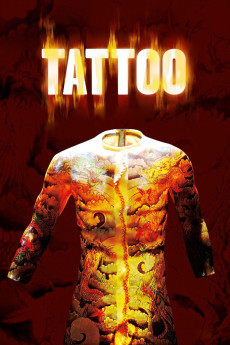
Tattoo
Marc Schrader, a rookie cop caught red-handed with drugs in a police raid of an illegal rave, joins a homicide investigation conducted by Chief Inspector Minks. The victim is a naked young woman with the skin stripped off her back, killed as she staggered into traffic. As Schrader and Minks investigate the murder, the case is complicated by a finger found in the stomach of the victim. Forensic examination proves the finger belongs to Nobert Günzel, who was previously convicted of rape and assault. The police raid Günzel’s residence, and discover a blood-stained table with restraints and bits of human flesh in his basement. They also find video equipment and preserved, tattooed skin from the victim’s back. Soon, they found dead bodies buried in the garden. Günzel then goes missing.
Die Geschichte der Menschheit - leicht gekürzt
In order to leave a lasting impression in space, Dr. Georg Friedle and his team of researchers include a condensed version of world history with the 1977 Voyager mission. However, their attempt to present themselves as an intelligent and empathic race backfires unchecked: their version presents a completely insane species whose development is apparently based on pure luck rather than solid reason. A planet where Greek philosophers are celebrated as rap stars, religion is touted as a clever marketing concept, stag parties serve as a secret weapon in the First World War and the construction of the Great Wall of China is a misunderstanding of honest Berlin craftsmanship. Even the revelation of the alleged true background to the assassination attempt on Hitler is likely to make experienced historians see the end of humanity as a mere matter of time.
×


 Miriam Dehne
Director
Miriam Dehne
Director
 Jasmin Schwiers
as
Eve
Jasmin Schwiers
as
Eve
 Volker Bruch
as
Stefan
Volker Bruch
as
Stefan
 Stipe Erceg
as
Wassily
Stipe Erceg
as
Wassily

 Sven Unterwaldt Jr.
Director
Sven Unterwaldt Jr.
Director
 Martin Hentschel
as
Freddy
Martin Hentschel
as
Freddy
 Torben Liebrecht
as
Kellner
Torben Liebrecht
as
Kellner
 Florian Panzner
as
Poscher
Florian Panzner
as
Poscher
 Wanda Perdelwitz
as
Strichmädchen
Wanda Perdelwitz
as
Strichmädchen


 60%
60%

