Égi bárány
Allegory of the suppression of the 1919 revolution and the advent of fascism in Hungary; in the countryside, a unit of the revolutionary army spares the life of father Vargha, a fanatical priest. He comes back and leads massacres. A new force, represented by Feher, apparently avenges the people, but only to impose a different, more refined and effective kind of repression.
Don't Cry, Pretty Girls!
Savanyú and his friend work at a plant. After the monotonous shifts they engage in the pleasures of the afternoon and the night, i.e. parties and concerts. Savanyú dates Juli, they are already engaged. The young men live as sub-tenants, the young women in workers' hostels. None of these places are suited for spending time together. They are in need of an apartment. Out of the ruinous apartment which they lay siege on, however, they are sent away by the otherwise friendly policeman. At a concert held in the Park of Youth, Juli gets to know Géza. They flirt, then go to the country with a pop-group. Savanyú and his friends follow them. A minor fight cools the atmosphere.
Hotel Pacific
Set in the early 1930s, a young man finds a job as a dishwasher in a hotel and quickly works his way up the ladder. Loosely based on the novel by Henryk Worcell.
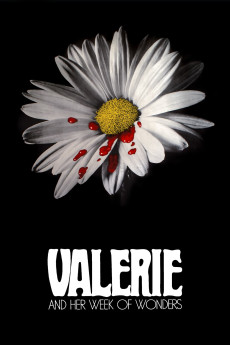
Valerie and Her Week of Wonders
Valerie, a Czechoslovakian teenager living with her grandmother, is blossoming into womanhood, but that transformation proves secondary to the effects she experiences when she puts on a pair of magic earrings. Now seeing the world around her in a different light, Valerie must endure her sexual awakening while attempting to discern reality from fantasy as she encounters lecherous priest Gracian, a vampire-like stranger and otherworldly carnival folk.
×


 Miklós Jancsó
Director
Miklós Jancsó
Director
 Jaroslava Schallerová
as
A fiatal anya / The young mother
Jaroslava Schallerová
as
A fiatal anya / The young mother
 Daniel Olbrychski
as
A hegedülõ / The violinist
Daniel Olbrychski
as
A hegedülõ / The violinist


 Jan Teplý
as
Guest
Jan Teplý
as
Guest
 Karel Augusta
as
Waiter
Karel Augusta
as
Waiter
 Jaromil Jires
Director
Jaromil Jires
Director


 80%
80%