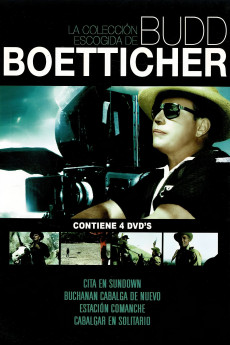
Budd Boetticher: A Man Can Do That
Documentary about filmmaker Budd Boetticher.
These Amazing Shadows
Tells the history and importance of The National Film Registry, a roll call of American cinema treasures that reflects the diversity of film, and indeed the American experience itself.
We Blew It
How did America change from Easy Rider into Donald Trump? What became of the dreams and utopias of the 1960's and 1970's? What do the people who lived in that golden age think about it today? Did they really blow it? Shot in Cinemascope - from New Jersey to California - this melancholic and elegiac road-movie draws upon the portrait of a confused, complex and incandescent America one year after the start of the electoral campaign. That golden age has become its last romantic border and an inconsolable America is about to pull on a trigger called Trump.
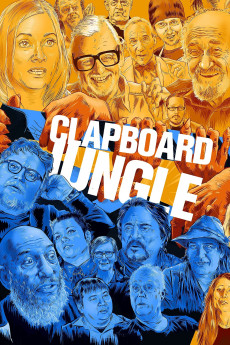
Clapboard Jungle: Surviving the Independent Film Business
Following five years in the life and career of independent filmmaker Justin McConnell, this documentary explores the struggles of financing, attracting the right talent, working with practical effects and selling the finished product in the hope of turning a profit. Featuring interviews with a range of industry luminaries, not only are technical aspects and interpersonal skills discussed but also the emotional stamina and little-known tips needed to survive in the low budget film industry.
The Road to Bresson
A Dutch documentary about legendary French filmmaker Robert Bresson.
Eames: The Architect & The Painter
Interviews with the junior designers swept into the 24-7 world of "The Eamery" are the heart of this complex picture of a husband-and-wife creative team that define the era of Mid-Century Modernism. Narrated by James Franco, the film draws from a trove of archival material, primarily the stunning films and photographs produced in mind-boggling volume by Charles, Ray, and their staff during the hyper-creative forty years of the Eames Office.
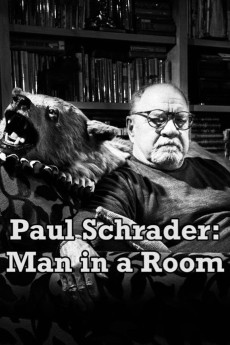
Paul Schrader: Man in a Room
In the sixth installment of the Criterion Channel's Meet the Filmmakers series, director Alex Ross Perry (Her Smell, Listen Up Philip) visits the ever-iconoclastic auteur Paul Schrader during the making of his 2017 masterpiece First Reformed. On set and at home- where, for his own pleasure, he continues to work and rework his previous films- Schrader reflects on the highs and lows of his legendary career, the challenges and rewards of slow cinema, and the influences and experiences that continue to shape his approach to filmmaking. With this insightful portrait of one of his filmmaking heroes, Perry captures an artist who is continually at play, intentionally provocative, and never less than vital.
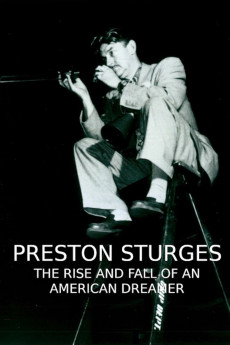
American Masters Preston Sturges: The Rise and Fall of an American Dreamer
Documentary about the life and work of film director Preston Sturges.
Hitchcock/Truffaut
Filmmakers discuss the legacy of Alfred Hitchcock and the book “Hitchcock/Truffaut” (“Le cinéma selon Hitchcock”), written by François Truffaut and published in 1966.
Richard Pryor: Omit the Logic
Mike Epps, Richard Pryor Jr. and others recount the culture-defining influence of Richard Pryor - one of America's most brilliant, iconic comic minds.
1982: Greatest Geek Year Ever!
A remarkable new epic documentary spotlighting the pop culture milestones of 1982 including notable motion pictures, TV, music and video games of that seminal year.
What She Said: The Art of Pauline Kael
Pauline Kael (1919–2001) was undoubtedly one of the greatest names in film criticism. A Californian native, she wrote her first review in 1953 and joined ‘The New Yorker’ in 1968. Praised for her highly opinionated and feisty writing style and criticised for her subjective and sometimes ruthless reviews, Kael’s writing was refreshingly and intensely rooted in her experience of watching a film as a member of the audience. Loved and hated in equal measure – loved by other critics for whom she was immensely influential, and hated by filmmakers whose films she trashed - Kael destroyed films that have since become classics such as The Sound of Music and raved about others such as Bonnie and Clyde. She was also aware of the perennial difficulties for women working in the movies and in film criticism, and fiercely fought sexism, both in her reviews and in her media appearances.
×

 Bruce Ricker
Director
Bruce Ricker
Director
 Quentin Tarantino
as
Interviewee
Quentin Tarantino
as
Interviewee
 Ed Harris
as
Narrator
Ed Harris
as
Narrator
 Clint Eastwood
as
Self - Interviewee
Clint Eastwood
as
Self - Interviewee
 Paul Schrader
as
Self - Interviewee
Paul Schrader
as
Self - Interviewee

 Christopher Nolan
as
Himself
Christopher Nolan
as
Himself
 Susan Sarandon
as
Janet Weiss
Susan Sarandon
as
Janet Weiss

 John F. Kennedy
as
Self
John F. Kennedy
as
Self
 Guillermo del Toro
as
Self
Guillermo del Toro
as
Self
 Tom Holland
as
Self
Tom Holland
as
Self
 James Fler
as
Self
James Fler
as
Self

 Louis Malle
as
Self
Louis Malle
as
Self
 Andrei Tarkovsky
as
Self
Andrei Tarkovsky
as
Self
 Dominique Sanda
as
Self
Dominique Sanda
as
Self

 James Franco
as
Self
James Franco
as
Self
 Charles Eames
as
Self
Charles Eames
as
Self
 Eddie Bracken
as
Self
Eddie Bracken
as
Self
 Joel McCrea
as
Self
Joel McCrea
as
Self

 Vera Miles
as
Herself
Vera Miles
as
Herself
 François Truffaut
as
Himself
François Truffaut
as
Himself
 David Fincher
as
Himself
David Fincher
as
Himself

 Merv Griffin
as
Himself
Merv Griffin
as
Himself
 Robin Williams
as
Himself
Robin Williams
as
Himself
 Michael Schultz
as
Himself
Michael Schultz
as
Himself

 Ron Howard
as
Self
Ron Howard
as
Self
 Keith David
as
Self
Keith David
as
Self
 Jon Cryer
as
Self 1 episode, 2023
Jon Cryer
as
Self 1 episode, 2023

 Sam Peckinpah
as
Self - Filmmaker
Sam Peckinpah
as
Self - Filmmaker
 Robert Altman
as
Self - Filmmaker
Robert Altman
as
Self - Filmmaker


 85%
85% Alex Ross Perry