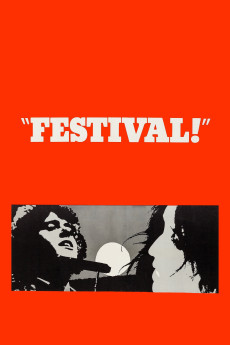
Festival
Black and white footage of performances, interviews, and conversations at the Newport Folk Festival, from 1963 to 1966. The headliners are Peter, Paul and Mary, Joan Baez, Pete Seeger, and Bob Dylan, who's acoustic and electric. Son House and Mike Bloomfield talk about the blues; John Hurt, Howlin' Wolf, and Sonny Terry and Brownie McGhee show its range. The Osborne Brothers perform bluegrass. Donovan, Johnny Cash, Judy Collins, Mimi and Dick Farina, and others less well known also perform. Several talk musical philosophy, and there's a running commentary about the nature and appeal of folk music. The crowd looks clean cut.
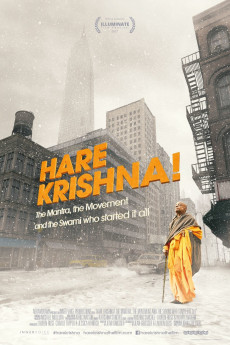
Hare Krishna! The Mantra, the Movement and the Swami Who Started It
"Hare Krishna!" is a documentary on the life of Srila Prabhupada, the 70-year-old Indian Swami who arrives in America without support or money and ignites a worldwide spiritual phenomenon, now known as the Hare Krishna Movement.
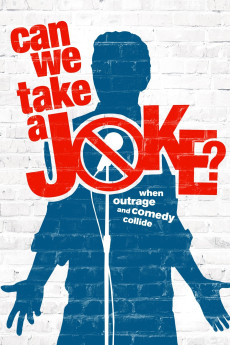
Can We Take a Joke?
In the age of social media, nearly every day brings a new eruption of outrage. While people have always found something to be offended by, their ability to organize a groundswell of opposition to – and public censure of – their offender has never been more powerful. Today we're all one clumsy joke away from public ruin. Can We Take A Joke? offers a thought-provoking and wry exploration of outrage culture through the lens of stand-up comedy, with notables like Gilbert Gottfried, Penn Jillette, Lisa Lampanelli, and Adam Carolla detailing its stifling impact on comedy and the exchange of ideas. What will the future will be like if we can't learn how to take a joke?
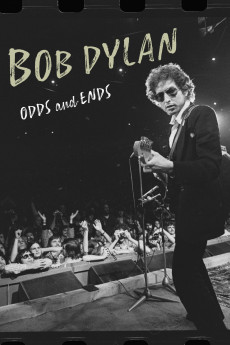
Bob Dylan: Odds and Ends
Bob Dylan "Odds and Ends" is composed of archival interviews, promotional videos and documentary shorts. It tells the story of some of the most important moments in the legendary artist's career.
The B-Side
Portrait photographer Elsa Dorfman found her medium in 1980: the larger-than-life Polaroid Land 20x24 camera. For the next thirty-five years, she captured the “surfaces” of those who visited her studio: families, Beat poets, rock stars, and Harvard notables. As pictures begin to fade and her retirement looms, Dorfman gives Errol Morris an inside tour of her backyard archive.
Tiny Tim: King for a Day
The story of Tiny Tim’s improbable rise to stardom is the ultimate fairytale - and so is that of his downfall. For a brief time, the shy and truly unusual outsider artist was the biggest star in the world.
Karen Dalton: In My Own Time
Blues and folk singer Karen Dalton was a prominent figure in 1960s New York. Idolized by Bob Dylan and Nick Cave, Karen discarded the traditional trappings of success and led an unconventional life until her early death. Since most images of Karen have been lost or destroyed, the film uses Karen's dulcet melodies and interviews with loved ones to build a rich portrait of this singular woman and her hauntingly beautiful voice.
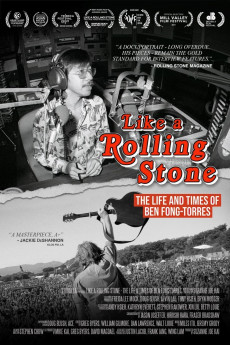
Like a Rolling Stone: The Life & Times of Ben Fong-Torres
Suzanne Joe Kai's intimate documentary shows us how the Rolling Stone writer and editor defined the cultural zeitgeist of the ’60s and ’70s.
Elvis Presley: The Searcher
Two-part documentary about the life of Elvis Presley featuring interviews with his ex-wife Priscilla Presley, guitarist Scotty Moore, childhood friend Red West and musicians Tom Petty, Bruce Springsteen, Emmylou Harris and Robbie Robertson.
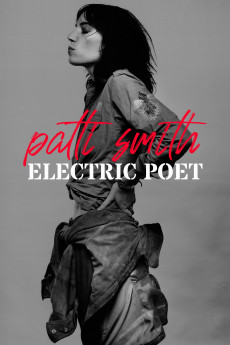
Patti Smith, la poésie du punk
At the age of 20, Patti Smith arrives in New York and upsets the codes of rock, poetry, and genre. She has become a living legend without ever leaving the sidelines. A poet, actress, and musician. Also militant. An artist with a thousand lives, now 74 years old. The documentary follows the course of Patti Smith's life. Childhood first, and the artist who says: "I wanted to be someone special. I felt distant. Not just from other children, I felt far from the whole world. I spent my childhood in think I was an alien. " Little Patti grew up in rural New Jersey and received a religious education from her Jehovah's Witness mother. But Patti Smith leaves the movement, which does not suit her artistic inclinations.
Days of Rage: the Rolling Stones' Road to Altamont
The decade that began with peace and love was shattered in the late 1960s amidst riots, assassinations and a war that wouldn't end. The Rolling Stones became the voice of this new era, which came to a horrific end at the Altamont festival.
Nothing Compares
Since the beginning of her career, Sinéad O’Connor has used her powerful voice to challenge the narratives she was surrounded by while growing up in predominantly Roman Catholic Ireland. Despite her agency, depth and perspective, O’Connor’s unflinching refusal to conform means that she has often been patronized and unfairly dismissed as an attention-seeking pop star.
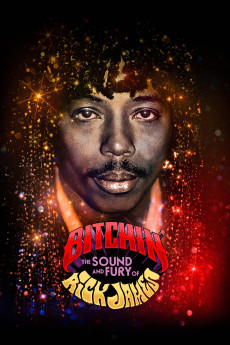
Bitchin': The Sound and Fury of Rick James
This profile of legendary funk/R&B icon Rick James captures the peaks and valleys of his storied career to reveal a complicated and rebellious soul, driven to share his talent with the world.
Johnny Cash! The Man, His World, His Music
In this classic 1969 documentary, the Man in Black is captured at his peak, the first of many in a looming roller-coaster career. Fresh on the heels of his Folsom Prison album, Cash reveals the dark intensity and raw talent that made him a country music star and cultural icon. Director Robert Elfstrom got closer than any other filmmaker to Cash, who is seen performing with his new bride June Carter Cash, in a rare duet with Bob Dylan, and behind the scenes with friends, family and aspiring young musicians.
David Crosby: Remember My Name
You thought you knew him. Meet David Crosby now in this portrait of a man with everything but an easy retirement on his mind. With unflinching honesty, self-examination, regret, fear, exuberance and an unshakable belief in family and the transformative nature of music, Crosby shares his often challenging journey.
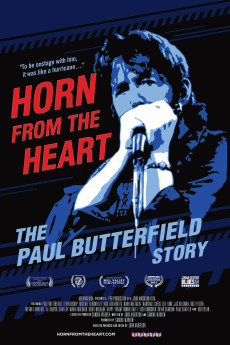
Horn from the Heart: The Paul Butterfield Story
The life and career of legendary blues musician Paul Butterfield, including some of the most pivotal moments of his life.
The Source
Traces the Beats from Allen Ginsberg and Jack Kerouac's meeting in 1944 at Columbia University to the deaths of Ginsberg and William S. Burroughs in 1997. Three actors provide dramatic interpretations of the work of these three writers, and the film chronicles their friendships, their arrival into American consciousness, their travels, frequent parodies, Kerouac's death, and Ginsberg's politicization. Their movement connects with bebop, John Cage's music, abstract expressionism, and living theater. In recent interviews, Ginsberg, Burroughs, Kesey, Ferlinghetti, Mailer, Jerry Garcia, Tom Hayden, Gary Snyder, Ed Sanders, and others measure the Beats' meaning and impact.
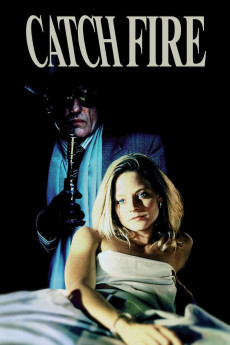
Catchfire
A witness to a mob assassination flees for her life from town to town, switching identities, but cannot seem to elude Milo, the chief killer out to get her.
Hallelujah: Leonard Cohen, a Journey, a Song
This feature-length documentary explores the life of singer-songwriter Leonard Cohen as seen through the prism of his internationally renowned hymn, Hallelujah.
Tom Petty and the Heartbreakers: Runnin' Down a Dream
Directed by Peter Bogdanovich and packed with rare concert footage and home movies, this documentary explores the history of Tom Petty and the Heartbreakers, including Petty's famous collaborations and notorious clashes with the record industry. Interviews with musical luminaries including Jackson Browne, George Harrison, Eddie Vedder, Roger McGuinn, Jeff Lynne, Dave Stewart and Petty himself shed some revelatory vision.
×

 John Griesser
Director
John Griesser
Director
 George Harrison
as
Self
George Harrison
as
Self
 Bob Dylan
as
Self
Bob Dylan
as
Self
 Timothy Leary
as
Self
Timothy Leary
as
Self
 Penn Jillette
as
Self
Penn Jillette
as
Self
 Steve Allen
as
Self
Steve Allen
as
Self
 Darius Rucker
as
Self
Darius Rucker
as
Self
 Jeff Bridges
as
Self - Narrator
Jeff Bridges
as
Self - Narrator


 'Weird Al' Yankovic
as
Narrator
'Weird Al' Yankovic
as
Narrator
 Ed McMahon
as
Self
Ed McMahon
as
Self

 Vanessa Carlton
as
Self
Vanessa Carlton
as
Self
 Quincy Jones
as
Self
Quincy Jones
as
Self
 Steve Martin
as
Self
Steve Martin
as
Self
 Stevie Wonder
as
Self - Musician
Stevie Wonder
as
Self - Musician

 John Lennon
as
Himself
John Lennon
as
Himself

 John Kennedy Jr.
as
Self
John Kennedy Jr.
as
Self
 Michael Caine
as
Self
Michael Caine
as
Self

 Joe Pesci
as
Self
Joe Pesci
as
Self
 Sherilyn Fenn
as
Self
Sherilyn Fenn
as
Self
 Tim Robbins
as
Self
Tim Robbins
as
Self
 Sacha Jenkins
Director
Sacha Jenkins
Director
 Merv Griffin
as
Self
Merv Griffin
as
Self
 Eddie Murphy
as
Self
Eddie Murphy
as
Self

 Dale Evans
as
Self
Dale Evans
as
Self
 June Carter Cash
as
Self
June Carter Cash
as
Self

 Graham Nash
as
Self
Graham Nash
as
Self
 Michelle Obama
as
Self
Michelle Obama
as
Self
 B.B. King
as
Self - Interviewee
B.B. King
as
Self - Interviewee

 Johnny Depp
as
Jack Kerouac
Johnny Depp
as
Jack Kerouac
 John Leguizamo
as
Self
John Leguizamo
as
Self
 Dennis Hopper
Director
Dennis Hopper
Director
 Jodie Foster
as
Anne Benton
Jodie Foster
as
Anne Benton
 Tony Sirico
as
Greek
Tony Sirico
as
Greek

 Rufus Wainwright
as
Self
Rufus Wainwright
as
Self
 Amanda Palmer
as
Self
Amanda Palmer
as
Self
 k.d. lang
as
Self - Performer / Vocalist
k.d. lang
as
Self - Performer / Vocalist

 Peter Bogdanovich
Director
Peter Bogdanovich
Director
 Dave Grohl
as
Self
Dave Grohl
as
Self


 73%
73%


